Wednesday, 22 April 2009

An Inventor Biopic for our Age (that isn't The Social Network)

The still very much in-development Facebook movie was inevitable from the point the website took off. Three Harvard students work on limited resources to develop a modern cultural phenomenon, gaining fame and success in the process. There's certainly a film that can be made out of that story and the subject matter alone is likely to attract the coveted 18-30 market. It could well be the sort of feel good story so important to the industry in times of economic hardship; the 'average' guys who hit on a good idea and are successful against the odds. Its the sort of thing we can all dream of.

Except that's where the problem lies. Much like Tom from Myspace, Mark Zuckerberg and co. are too often portrayed as the 'average blokes who just got lucky' but try as I might I just cannot see them that way. As remarkable as Zuckerberg's achievements are, he is far from average. Much is made of the gamble he took in dropping out of university to pursue his dream but it was Harvard he dropped out of and he had already been courted by Microsoft and AOL. He may have stumbled on a very simple and brilliant idea but it was an idea born out of an incredible computing brain which knew exactly how to advance and spread the business. Don't get me wrong, this is still an underdog story, but not the sort the average cinema goer can dream of emulating.

So where am I going with this? Well I was recently struck by the remarkable success story of a company that was not just surviving in the recession era, it was thriving. It's a company that's main idea is remarkably simple but remains timeless. Born out of the most humble of beginnings its as universally recognised as it is iconic. It's Lego.

Yes Lego.

Its a story that deserves to be told and the type that a modern audience can really identify with and be inspired by.

You see, Lego arose from the ashes of the Great Depression. Its creator, Ole Kirk Christiansen was just a humble carpenter who in 1924 had seen his workshop burn down and had very nearly gone bankrupt as the world struggled in the early 1930's. He started making toys to get by and hit on a very simple, but very brilliant, idea in interconnecting building blocks. Its the sort of thing people look at and just think: "I should have thought of that."

The company's growth from such humble beginnings to what it is today is just as inspiring. With the help of his son, Godtfred, Christiansen set about building an empire, seeing the potential of the product and risking their livelihood on its success. There were setbacks along the way but Lego began attracting the attention, and the profits, to expand around the world.

Its hard to imagine a product that is so universally popular and so fondly remembered as Lego. Facebook may be phenomenally successful, but it's not universally loved. Does Lego create debates about a surveillance society? No. Is it criticised for its cynical policies on advertising? No. Is it accused of being hopelessly addictive and time consuming? Well yes. But the point remains its a company that everyone can get behind and a story that deserves to be on the big screen.

This is perhaps unlikely to happen. Details of the personal aspects of Christiansen are hazy, and of course personalisation is crucial in biopics. And then there is the fact that this is not an American success story, its a Danish one, and perhaps that is the only country where we will see such a biopic emerge from. I'd still watch it though because there are very few success stories that can beat the timelessness and true underdog quality of Christiansen's. Its a feel good, hopeful film we could all do with.

Stumble Upon Toolbar

Monday, 6 April 2009

Underrated: 5 reasons why The Fall deserves your respect


Never before has a trailer for a film caught me so off guard as for The Fall. When I first saw it I had heard no buzz about the film at all but the trailer left me fascinated; why was such a sprawling, visually stunning movie creeping in under the radar? True, it had a no-name cast, a director who had only made one previous film, and a budget far smaller then its grand scope let on but this only peaked my interest and I made it my mission to see this film. This proved to be a more difficult task than I imagined, with the film being released in the U.K. almost 2 years after it had originally premiered at Toronto. The film has begun to get some love, with Roger Ebert in particular giving it an enthusiastic review, but it still remains sorely underrated, not least for the following reasons...

The Locations

Real, non-CGI, stunning locations from around the world. CGI may allow you to create any landscape you choose, but this was not an option for director Tarsem. He financed much of the film and over a period of four years took his actors around the world shooting scenes as they went. Its the kind of attitude a studio producer would balk at but The Fall is a labour of love. Tarsem's method may not have been the most time or cost effective but by shooting in the beautiful, hidden locations that the world has available, the film appears far more expensive then it actually is. Its all the more impressive that the film feels so surreal and stylised, much like 300, but without a green screen in sight.

Catinca Untaru

I'm really not a fan of child actors. They're either played up to be too cute or are molded by the industry to become far too self aware. Dakota Fanning is a good example. Catinca Untaru's was one child performance I did like. To date, The Fall, is her only screen acting performance and I would not be surprised if it was her last. She is not a product of Hollywood, she's a slightly chubby Romanian who can't really boast the child 'acting' ability of Dakota and co. But what is so good about her performance is that you never really think of her as acting at all. Every emotion she expresses seems genuine and heartfelt and rumour has it that she genuinely believed actor Lee Pace was a paraplegic rather than just his character. I can believe that; Untaru doesn't seem to be a character, she just seems to be acting herself, and is all the more believable because of it.

The blurring of reality

The fairytale-mirroring-real-life concept is far from new, and many narrative-within-narrative stories tend to over do it to the point that it becomes gimmicky but in The Fall its done with subtlety; reminding us that the epic story of revenge is the product of 2 people's imagination yet not requiring us to analyse the tiny details until we lose sight of the story. The characters cross over and the villain is inevitable but I love the little details. Watch out for the similarity between the henchmen's armour and the X-ray suits and the appearances of each of the revenge seeking heroes in very small, blink-and-you-miss-them roles in and around the hospital. Its not essential to the storyline, but its well thought out and demonstrates this film has far too much depth to be dismissed as a piece of eye-candy.

The Dark Themes


Every fantasy film that comes out these days seems to assume that darker is better but The Fall managed to trump them without even really trying. The film may be a story of a man telling a fairytale to a child but it is one of anger, revenge and death. The story reflects the ever changing mentality of its storyteller, suicidal and heartbroken, as he becomes increasingly desperate, so does the story. It doesn't take long to realise that he is not entertaining and gaining the trust of the child for her benefit and sets Untaru's Alexandria up as a symbol for hope and redemption. This is a grown-up and knowingly cynical tale that evolves with the characters to set up brilliantly intense climax.

And Finally, this guy...


'nuff said.

Stumble Upon Toolbar

Monday, 23 March 2009

Underrated: Brendan Gleeson


So you're making a big, epic ensemble movie, your lead actor is embarrassing himself and you need your supporting players to step up and give the film a bit of credibility. Who do you call? Brendan Gleeson. This guy's never gonna be your traditional leading man in these films. He looks a bit like the bloke down the pub who you're not sure if he's going to buy you a pint or punch you, but he is always solid and its no coincidence that he crops up in so many summer blockbusters. The guy's a pretty sure bet to put in a good performance without overshadowing the pretty-boy lead.

I'd seen Gleeson pop up in a number of films over the years, particularly in an awesome but brief role in A.I., but I only really started to follow this guy after I saw 28 Days Later. All I could think was that this guy does Ray Winstone better than Ray Winstone and that he was playing the rarest of things in modern horror movies; a believable, sympathetic character. Alot of this is testiment to the superior team behind the film but it was the perfect role for Gleeson. Very few people can do the gruff father figure better than Gleeson; he only started acting at 34 so its the kind of role he's grown into with each passing film.

However, where Gleeson really shines is in historical epics. Like Orlando Bloom, he cropped up in both Troy and Kingdom of Heaven, but unlike Orlando Bloom he was competant and believable as a historical character. He can play the eccentric, booming individual that characterise these films with ease and can challenge the Rickmans of this world for scenery-chewing brilliance that makes everyone else look boring or sit back and be the wise mentor if needs be. And if you need a guy to beat up Mr. Bloom and make him look as pathetic as possible he's your man. And who couldn't love him for that?


The film industry seems to finally be recognising Gleeson's value. He's joined the elite band of thespians proudly cashing their paychecks from the Harry Potter franchise and is beginning to get some seriously meaty roles, not least in last year's In Bruges, and later this year will be playing one of history's most interesting figures as Winston Churchill in Into The Storm, the follow up to The Gathering Storm. That film featured an amazing Albert Finney perfomance which will be hard to match but if anyone can fill his shoes its Brendan Gleeson and he could very well be a good bet for an Oscar nod. About time too.

Stumble Upon Toolbar

Saturday, 7 March 2009

When will Pixar break the best picture barrier?


Post Oscar nominations, The Reader got a bit of a bad reputation on the internet. It’s not necessarily the film’s fault; many hadn’t seen it, but the general consensus seemed to be that it was taking the rightful place of another, better, and less awards friendly film amongst the best picture nominees. To many this was the Dark Knight, the record breaking behemoth that maybe, just maybe, would be too big for the academy to ignore. But perhaps the most interesting fan favourite for the fifth spot on the shortlist was Wall-E, the little robot that could.

Well, not quite. He couldn’t in the end. He was trying to get a place in an exclusive club to which he didn’t belong, but the important thing was that fans and critics alike felt he should belong there. And why not? The film consistently topped end of year “best of” lists and was as original as it was groundbreaking. But it had a little problem. A quite big problem actually. Pretty massive actually. There’s ‘best picture’ quality films, then there’s animation, or so say the academy.

But of course, you may say, that’s what the Best Animated Feature award is for. An entire award for one genre should be fair enough, and it really would be if it wasn’t 60 years too late. There may have been complaints that The Dark Knight’s status as a superhero genre movie effectively ended its chances of getting a best picture nomination but the fact remains that it’s the only movie in that genre good enough to get one. Comedy and horror fans (rightly) lament the fact that their genres are not taken seriously enough by the academy but do get occasional recognition. Up to the millennium, however, animation was largely ignored in major categories. Most of the now immortal Disney classics had to contend themselves with the odd technical or musical nod.

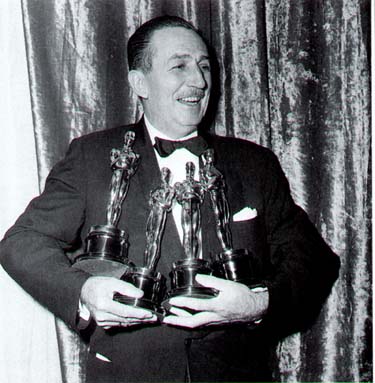
Walt Disney himself was probably not too concerned with this. The man won 22 Oscars, enough to make a football match out of little golden men if he so chose. The vast majority of these were for his short animations however and the fact remains that Beauty and the Beast remains the sole Disney animation, or any other animation for that matter to garner a best picture nomination in the award’s history. Think about that; one of the most difficult and painstaking forms of filmmaking, designed to cater for the most demanding of audiences has one best picture nomination in 81 years.

Walt Disney and his army of Oscars

The audience, however, is a problem. Traditionally they’re quite small, not particularly respected as critics and enjoy simple pleasures like mud and tantrums. But someone noticed that the big people they dragged along to see the animated films got rather annoyed if there was nothing in them that they could enjoy. Most animated movies are still aimed squarely at kids; talking animal goes on adventure, maybe makes soft allusions to intercourse/marriage to satisfy the adults who are trying to figure out if that’s Burt Reynolds they can hear. But Pixar has always challenged this formula by making films with broad and complex themes that can still appeal to kids. That’s why The Incredibles can be a children’s animation and one of the best action movies this century and why Ratatouille’s narrative and emotion overshadows the cute talking rat.

The Incredibles: family drama, comedy, action-adventure and superhero movie rolled into one

Best Animated Feature may have been created to recognise the technological advances and resurgence in popularity of animated films but when these films begin to transcend the confines of their genres the category can limit rather than celebrate their achievements. In much the same way that foreign language films are occasionally limited to their own specialist category when they deserve a higher accolade, Pixar has demonstrating that the animation bar can be pushed higher and higher and be so much more than a ‘kids’ film. Last year they made a film with barely any dialogue capture the attention and imaginations of its audience and this year, Up, a film with a grumpy septuagenarian as its hero, looks to be its most ambitious and riskiest project yet. But we say the same about every new Pixar project, and they never cease to amaze.

You can’t say the same thing about many of the finest of film producers and perhaps it’s time that the awards that define greatness recognise that on the rarest of occasions animation, gorgeous as it may be, is more than just animation.


Technorati Profile

Stumble Upon Toolbar