I'm quite looking forward to the new movie year. I always do because no matter how pessimistic I get there's always something that has the potential to be amazing. One film coming out next year that's really jumping off the page at me at the moment is Green Zone, the film that sees Paul Greengrass and Matt Damon teaming up again to tackle the Iraq war.
The trailer hit a few weeks back and looked very impressive but there was a disgruntled murmur going around that it looked just like Bourne in Iraq. Corrupt government employees, rogue Matt Damon, mysterious MacGuffins, shaky cams and brutal fistfights; they're all there, just in a desert setting. I see where people are coming from, but my question is so what?
Of course it is going to look familiar. Bourne is the roll Matt Damon has become synonymous with (Team America aside) and Paul Greengrass has a very distinct, documentary style of directing that he's made his own and used to great effect in The Bourne Supremacy and The Bourne Ultimatum. He's one of the few directors that can use shaky cam well (see Mark Forster's Quantum of Solace for an example of how not to do it) and it could well be a perfect match for an Iraq war thriller.
Damon and Greengrass have proven to make a good team in the past and it's clear from the trailer that the film is going for the suspenseful, claustrophobic and action-packed feel that they've captured so well before. This doesn't mean they aren't taking risks; Iraq war films have so far proved very difficult to get right. Linger too long on the sobering politics and you lose your audience, skim too lightly over the issues that matter and you lack substance and depth. Most difficult of all, it's proven extremely difficult to make a film about such a controversial war that just happens to be entertaining. If Greengrass can get the balance right it will be some achievement, but he is the man for the job.
If you had any more doubts, just look at the cast. Damon aside, we've got the incredibly underrated Brendan Gleeson, Jason Isaacs and Amy Ryan. If that wasn't enough, it's got Greg Kinnear(!)
Don't get me wrong, I don't want this to be Bourne in Iraq but if some of the style and expert handling of a thriller is translated to the Iraq setting then it is only going to be a good thing. My only hope is Greengrass, Damon etal. don't prove me wrong.
My attention has been drawn to this article on a mini Chevy Chase revival in the last few months.
You may recall my argument that it's time for Chevy to be welcomed back into the mainstream and it seems he may be gaining popularity once again. I haven't seen Community, the new NBC comedy that he has a role in but I was pleasantly surprised to see Chevy and Dan Aykroyd in a recent episode of Family Guy. The article seems to be making a big leap of faith to call this a full-scale comeback but it's more or less a plug for Community anyway. Considering the depths he's had to sink to in the pass it's good to see Chevy getting some positive press again.
Without giving too much away, my early concerns about 2012 blowing its disaster load too early like The Day After Tomorrow have been heeded. This is full-on, unrelenting disaster porn. After 30-odd minutes or so of the most unconvincing of set-ups and the standard bad science things start to go wrong. Then they get worse. And worse. And worse. For two whole hours.
There is, of course, nothing wrong with this. It's what people want to see in disaster movies and one-trick-pony accusations aside, Roland Emmerich has a pretty good idea of what people want to see in disaster movies. They want stuff getting broken in spectacular ways, (preferably recognisable Western monuments), a tsunami (because every disaster movie has to have one), people just barely escaping certain death and characters with just about enough depth for you to want them to survive.
So how does Emmerich do on these fronts?
Well stuff gets broken. A lot. In fact, this is the stuff-getting-brokenest of any film I have ever seen. Family homes fall into huge chasms, skyscrapers collapse, and, oh yes, you better believe some famous monuments get destroyed. Look out for a scene in Vatican City that may as well have METAPHOR flashing in huge red letters on the screen. You can't fault 2012 for the destruction it unleashes, and as you may have guessed from the trailer, there are tsunamis taller than mountains too. It's all rather fun actually, for a while. The effects are probably the best the genre has seen but after a while the spectacle of endless destruction begins to become surprisingly dull.
As for the narrow escapes, well it's pretty fair to say Emmerich went overboard. John Cusack's character is one of the luckiest I have ever seen and possibly the most heroic novelist since Stephen King slagged off Twilight. Think of a vehicle, any vehicle, and John Cusack probably came close to certain death in it in this film. Whilst watching the film, I wouldn't have been surprised to see him heroically outrunning a pyroclastic flow on a lawnmower as long as he was doing it to protect his children.
I really liked the look of the cast for this film so it was so disappointing that it was the characters that let this film down. Emmerich fails to give us a team of survivors who we really want to see alive at the end of the film. He makes a rather ham-fisted attempt at political commentary, complete with ruthless and bureaucratic governments and bad impersonators of real world leaders so it's not surprising that we're meant to not particularly like a couple of members of the American government. However, the whole of the main cast is so two-dimensional and self-involved that you begin to think about all those being killed in the carnage on-screen and wonder what makes these guys so worthy of survival. I honestly can't feel for people who decide that, in the midst of an event taking billions of lives, that they should have a heart to heart on why their marriage failed.
But I guess what I should have learned from Emmerich's films before is that it's not about plot or character development or plausibility or anything unimportant like that. It's about carnage. If stuff is getting broken and there are tsunamis left right and center who cares? As a form of escapism I must admit it is fun, but be warned, the moment you start to think about what you're watching you'll regret it. So abandon all logical thought and take in the effects and you might just enjoy this film.
It is with regret that I feel I cannot comment at length on Edward Woodward's career. Much of his work through the 70's and 80's, particularly on TV, were admitedly before my time. I am of course, familiar with his more famous roles, and I have enjoyed his sporadic appearances on our screens in recent years, particularly his small but memorable roles in Hot Fuzz and the excellent BBC thriller 'Messiah.'
However, I, like many, will always associate Edward Woodward's name with The Wicker Man, possibly the greatest horror film Britain has produced and one of the greatest the genre has seen. For all Sir Christopher Lee's scene-stealing eccentricities in the film, it was Woodward's perfomance that helped elevate it to another level. As the chaste Sergeant Howie, Woodward brilliantly displayed the outrage of a man aghast at the rituals and debauchery taking place on the island. The character was not particularly likeable yet his intentions were honest and his offence was genuine, which only served to make the famous finale more shocking. The look of horror on Woodward's face and the uttering of "O, Lord! O, Jesus Christ!" upon seeing the titular wicker man for the first time will live on long in the memory as one of the great horror moments.
So it was with great sadness that I read of the death of Edward Woodward today. I wish I was more familiar with his other work and could provide a more fitting tribute but I wish to thank him for the enjoyment he has brought me. Rest in peace.
There were groans all round when news of this film first hit. The original has its cult following but it's hardly a classic. But then we started to see the cast list Louis Leterrier started to gather together and although there was no-one quite in Olivier's league it was pretty decent and with a good budget and a capable director it began to look like CotT MIGHT be a fun blockbuster movie.
I've always stressed that a great remake doesn't have to be a remake of a great film. On the contrary in fact; when we get pointless remakes of classics such as Gus Van Sant's baffling shot-for-shot remake of Psycho it all just seems like a cynical money-spinning exercise. If you're going to remake a film universally loved by all you better not screw up because an awful lot of people are going to end up pissed off.
But on the other end of the scale we have Ocean's Eleven. It was a decent enough effort in 1960 but was little more than a vehicle for the Rat Pack. Steven Soderbergh saw the potential of the film, gave it a fantastic cast, a modern update and a crowd pleasing storyline and he was on to a moneyspinner. The original Clash of the Titans has the potential, and an update for the CGI era could be just the ticket.
Why? Well thats simple. Greek mythology is fun. I always felt Troy missed a trick when it skipped the gods in favour of a more realistic adaption of Homer's epic. These aren't serene, loving gods watching over us, they are jealous, vengeful, violent, and passionate. Greek mythology is a cinematic soap opera that has been underplayed of late. If this film does justice to it we could see more Greek myths on screen. It's not a bad thing at all if that happens; they're great stories that have survived for thousands of years and they deserve to be told again.
It has been far too long since I last updated this. There are many reasons for this but filmstubs will be returning with some more content this week and in the future. I may be making a few tweeks to the blog and changing things around a bit over the next couple of weeks. Watch this space.
Jean-Pierre Jeunet is one of the most creative directors to emerge in the last 20 years and, as a huge fan of his style, this is likely not the last time I will talk about his work. I will stress however, that I do not consider City of Lost Children to be his best film, but I have chosen it as the first of his films to enter the filmstubs archive. Why? because it needs to be seen to be believed and, frankly, not enough people have seen it. Most people know about Amélie, and most people that know Jeunet recommend Delicatessen to Amélie fans, and A Very Long Engagement, under seen though it was, had the benefit of being Jeunet's first film since the massive international success that Amélie brought him. Lost somewhere between all that is City of Lost Children, probably one of the most bizarre and inventive science fiction films made in recent years, and a product of the distinctly bizarre and inventive partnership of Jeunet and his co-director Marc Caro.
Revolving around a scientist who kidnaps children in order to harness their dreams and slow his aging process (so far, it isn't going well), City of Lost Children stars a pre-Hellboy Ron Perlman as a strongman who's brother has been kidnapped by said scientist and goes on a mission to rescue the boy. You may have noticed that Ron Perlman is not French, but, though not exactly talkative, he delivers all of his lines in a language he didn't even speak at the time and it's testament to his commitment that City of Lost Children is one of his finest performances. Along the way we meet some wonderful characters, including Dominique Pinon, making his usual Jeunet appearance, in multiple roles and providing some brilliant comic relief. It is however, Daniel Emilfork who is the real star of the show, playing the mad scientist Krank. It is probably one of the strangest performances ever captured on screen, with Krank being at once creepy, insecure, volatile and obsessive, all expressed by Emilfork's unique (and frankly terrifying) features. It has to be seen to be believed.
The future world that Jeunet and Caro create is impressive. It is not a mesh of CGI imagery like many modern sci-fi films, nor is it the colourful world we see in Amélie. City of Lost Children's world is grimy and surrealist, a world of varying shades of gray that somehow manages to showcase the unique eccentricities of it's filmmakers. The film is their vision, and the backdrop, the story, the characters we encounter and Emilfork's extraordinary performance make this film so unlike any other sci-fi vision that we are unlikely to ever see anything like it again. For that reason alone, it is something you should see.
First up is Inglourious Basterds, which probably doesn't need any introduction. I am a Tarantino fan, but I'm decidedly on the fence about this one. Brad Pitt's accent is grating already, Mike Myers' English officer seems a bit ridiculous, and oddly considering my usually morally dubious attitude towards films, something doesn't quite sit right with me about this film's content. I'll only assess that upon actually seeing the film though and I really hope this is a return to form for Tarantino after the frankly rather dull Death Proof. This trailer gives a lot more info on the plot and it does look like it could be fun.
Next up is a World War II production to really get excited about. "The Pacific," Steven Spielberg and Tom Hanks' long awaited follow up to the excellent HBO mini-series "Band of Brothers" has a trailer and it looks like it could well be the most visually impressive TV series ever. I think for events as complex as WWII, a mini-series is a better way of portraying it than in film and "Band of Brothers" was able to go into depth about regular soldiers and their relationship with their peers and enemies in far more detail than any film could. "The Pacific" is set against the backdrop of the war with the Japanese and if it's anywhere near as good as "Band of Brothers" it will be worth watching. The trailer is certainly impressive.
He's widely praised for his fine acting ability, is a cult icon, has made appearances in great movies, and seems to be the most commonly used example for people claiming that "good actors don't have to be good looking." Steve Buscemi is many things to many people and to certain directors and producers he seems to mean an awful lot. He has made multiple appearances in the works of Quentin Tarantino, the Coen brothers, Robert Rodriguez, and...umm...Adam Sandler. These collaborations (not counting those with Sandler) have provided wonderful results, with Buscemi giving memorable performances in cult classic films. But if you tear yourself away from these wonders, you will be reminded of the fact that, like most film stars, Steve Buscemi is fallible, and, like most film stars, he has been in some trash.
This is where we come to the Steve Buscemi factor. Steve Buscemi, traditionally being a supporting actor, rarely gets enough screen time to completely save a movie and some films are simply beyond saving no matter how awesome the star. But, like Christopher Walken (the master of improving bad films) he has the rare ability of making crap films almost watchable by his mere presence alone. This is particularly useful for his appearances in Adam Sandler films but extends to much of his work.
Perhaps the finest example of this is the bloated cheese-fest that is Armageddon. It had its problems from the start, with a cast that, on paper, seemed to be high quality, but any good will towards this was completely negated by the acting of Ben Affleck. It didn't help that they were all given incredibly two dimensional characters either (Peter Stormare's mad Russian anyone?). The only actor to really emerge with any credit was Steve Buscemi, who, despite essentially phoning in a performance as the accident-waiting-to-happen joker of the pack managed to be more entertaining than the rest of the cast put together. He provided some much needed entertainment when Michael Bay realised that once we were past the exciting space mission we had to watch some people drill a big hole for a while and if it had not been for him Armageddon would have failed to convince me that Earth needed saving at all.
Another of Buscemi's occasional stabs at the action genre, Con Air, was saved by the genius who cast him as a serial killer. Nothing against Buscemi here, but he has made a career out of playing the creepy guy (Con Air wasn't his first serial killer role), and someone clearly noticed this and decided it was time to crank it up to eleven by casting him as a guy that wears severed heads as hats. Con Air wasn't an awful concept, it just had to cope with the burden of Nicolas Cage with a ridiculous accent and bad hair (sadly not the last time we would see this). Ving Rhames and John Malkovich made convincing psychopaths, but were nowhere near in the same league as Buscemi. With the exception of Dave Chappelle's skydiving, it was Buscemi that enabled me to see past Nicolas Cage. Perhaps it was the absence of Steve that stopped me from seeing past Nicolas Cage in Ghost Rider or Next.
There are other examples such as the Spy Kids sequels, where Buscemi only has small supporting roles, perhaps neutering his usual style (who thought he belonged in a kids movie!?) where the Steve Buscemi effect can still take hold and raise a smile in a sea of misery. Be it his tour de force as 'Homeless guy' in Big Daddy or his valiant efforts as we stared glum faced at the utter disappointment that was Escape From L.A., Steve Buscemi can make your bad film better by simply turning up (but we'd much rather he stuck to the good ones).
Roland Emmerich doesn't exactly make classic movies but if you accept that you're going to get a lot of special effects, not a lot of depth and a huge dollop of cheese you can have a good time with them (or some of them, at least). In my Jeff Goldblum post I implied I was a fan of Independence Day and I must admit I do enjoy Emmerich's brand of cheesy, disaster movie fun.
I liked The Day After Tomorrow more than most people did but the problem I had with it was that its money shot, so to speak, was far too early. Once the twisters, and the tsunami and the big freeze were out the way we had another hour or so of people walking around in the snow and being attacked by terrible CGI wolves. For a summer popcorn movie it just got a little, well, dull. The new trailer for 2012, based on the Mayan prediction of the end of the world in, you guessed it, 2012 looks like Emmerich might have learnt his lesson. There's a lot of action on display here, and an awful lot of planes, which I'm guessing is an important plot point. The cast also seems far better than TDAT. Chiwetel Ejiofor could do with a bit more Hollywood exposure (and an easier to spell name) and I'd believe Danny Glover as the president any day. Well, a lot more than I did Bill Pullman anyway.
Anyway, Yahoo has an exclusive new theatrical trailer over HERE. It doesn't look a classic, but it could be fun.
At the risk of offending Kenan & Kel fans, actors in George A. Romero films do not traditionally go on to great things. This is often fairly obvious from their performances, which with a few exceptions (Scott Reiniger, Ken Foree) tended to fairly over-dramatic or just plain bad. This isn't a complaint at all; bad acting comes with the territory in these sort of films and working within the budgets he had, Romero still managed to achieve amazing things with what he had to work with. More so than not, the acting just makes the experience better. Dawn of the Dead (1978) is one of my all time favourite movies to watch with friends as its one of those few films that manages to be both schlocky and just plain brilliant. It's one of the greatest horror films ever made but there are a few scenes which just makes the group crack up.
Which brings us to the cigarette guy, aka "Officer at Police Dock", aka Randy Kovitz. This guy always raises a cheer for a just plain bizarre performance in his minute or so on screen. He is a part of the gang who confront our heroes as they ready for their escape about 20 minutes into the film and somehow manages to become the most unsettling character in a film full of zombies. In his time on screen he manages to shout all his lines unnecessarily, run back and forth on screen like he's about to break into song in a stage musical and ask for cigarettes with a cross-eyed stare, over-expressive facial movements, followed up by the most unsettling grin imaginable. He's little more than an extra but somehow me manages to leave an impression on the movie. To this day I still cannot figure out whether the character was intended to be a faintly psychotic fool or Kovitz just showed up one day and decided that was how he was going to play him.
Funnily enough, Kovitz seems to have had more of a career than most of Romero's other actors. Even more surprisingly considering his cigarette guy character he seems to have carved out a career playing doctors. Go Figure.
But anyway, I for one will always remember him for his unique performance in Dawn of the Dead. It will always put a smile on my face and for that I salute you, sir.
I'm pleased to announce that filmstubs now has a sister site going by the name of gamestubs, which is, appropriately enough about games. I'm not actually running the site seeing as my knowledge of gaming is limited to the occasional Wii game (recovering Smash Bros. Brawl addict) but the admin, going by the name of RW, is an expert in the field and will be posting news, opinion, reviews and debate on gaming and gaming culture with input from other writers and maybe even yours truly.
Its definitely worth a look and you can check it out HERE
Additionally, we'll be looking to set up a musicstubs in the near future, and there may well be a couple of new writers contributing to filmstubs at some point.
Starting a semi-regular feature of short articles recommending classic films, hidden gems, or the just plain misunderstood, is M, Fritz Lang's masterful crime thriller. Whilst Metropolis may well be his most famous work, M is his masterpiece and a far more complete and engaging work. Following the hunt for a child-murderer by police, the local community and even fellow criminals, its subject matter was extremely provocative for the time; dealing with issues that are still disturbing for modern audiences. It is a film that was years ahead of its time and it remains one of the pioneers of the film-noir genre, employing a dark style and ingenious use of shadows.
What is remarkable about this film, is that 78 years later it still has the power to shock and get under your skin. This is not least because of a star-making turn from Peter Lorre as the villain, who makes one of cinema's greatest ever speeches, including the now legendary (translated) line: "Who knows what it's like to be me?" I won't give away the ending, but more than anything else the film is a remarkable study of human nature, both in the mentality of a murderer and the way a community reacts to him. In an ever paranoid and vigilant society, the content of the film is still incredibly relevant today, and the actions of the characters remain highly believable.
This is arguably the greatest film to ever come out of Germany and if you ever happen to stumble across it, watch it, and you will not be disappointed.
This has been popping up in a few places in the last week but I absolutely love it.
To celebrate its twentieth anniversary Empire has commissioned a piece of artwork that contains references to 50 hidden films and challenges you to name them all. Its very similar to something Virgin Digital did a few years back with band names, which got me completely hooked at the time and I've spent ages on Empire's version now. Anyway, I got to 42 before I went looking for answers. Close, but no cigar.
If someone were to ask you what you think of when asked about 90s blockbusters what would you say?
I'd have to give a number of replies to answer that, ranging from bullet time to that ginger kid with the mullet in Terminator 2 but someone who would definitely appear on the list is Jeff Goldblum. For some reason I think of him before I think of Schwarzenegger and Willis.
However, upon researching this article, it was to my great surprise that I discovered that the image I had of Jeff Goldblum cropping up in just about every big budget movie of the decade was actually a slight mental exaggeration. This was probably due to the fact that the last two 90's blockbusters I re-watched were Independence Day and Jurassic Park. But to my even greater surprise, Jeff doesn't even do very much in Jurassic Park. I admit it had been a few years since my last viewing, but I seemed to remember him doing more than sitting around injured and arguing with Richard Attenborough. It had got to the point where my brain had created its own improved version of Jurassic Park where Jeff Goldblum was knocking out velociraptors with a strong right hook and the children weren't in the film at all. In reality the guy from 3rd Rock From the Sun probably had a more important role than Jeff.
So it says a lot of Goldblum leaving his mark on the few big films he appeared in to make me think of him as synonymous with big 90's movies. Those years, however, seem long gone and Jeff has moved on to TV and theater work and the odd movie here and there, which is fine, but I don't think I've watched a film with him in since 2004's Life Aquatic With Steve Zissou. Which is too long, frankly.
It seems in the noughties blockbuster age, Jeff Goldblum's dryly delivered and stuttering brand of irony has been replaced by Shia LeBeouf's yelping and just plain annoying brand of irony. It's to be expected of course; I'm not suggesting a 56 year old Goldblum should replace LeBeouf, but there seems to be a shortage of fun actors around at the moment. I don't mean comic actors necessarily in this respect, but talented actors that can bring their own brand of personality and humour to a role; a certain uniqueness that makes them stand out from the crowd. Robert Downey Jr. is the best example of this kind of actor around at the moment and much of the success of Iron Man was down to his natural, irreverent charisma. It helped make Iron Man a movie that was focused on being fun, which in the post-Lord of the Rings age where blockbusters are falling over themselves to be "darker" than the last is actually a far rarer thing than it was in the 90's.
In his best performances, Goldblum had a very similar tone to Downey Jr; he may not be his equal but he could certainly be entertaining enough to stand out. Spielberg saw it when he gave him the lead in The Lost World; Jurassic Park was well cast, but audiences seemed to connect well with his character. It was perhaps surprising in itself that he was in such films; he never looked like an action hero, and his quirky style seems more suited to offbeat drama. As long as he's still in movies, I'd love to see him crop up in some decent films of any genre, but it would truly be great so see him once more utter the lines "must go faster" as he flees from the dinosaur/alien/giant robot/army that happens to be chasing him.
It is with great joy that I read the news that Christopher Lee is to be bestowed with a knighthood in the Queen's birthday honours list. It has been a long time coming but it is well deserved.
Lee may not be this country's most decorated actor and of his hundreds of credits more than a few should be forgotten, but nevertheless Christopher Lee is one of the most iconic of British actors. He possesses one of the most commanding screen presences of any actor; at once being able to appear authoritative and patriarchal and with his instantly recognisable voice he can quite often be plain terrifying. It is little wonder then, that he was the perfect fit for his most iconic role of Dracula in the Hammer Horror series of films.
It was after all, the performances of Lee along with Peter Cushing that really made Hammer Horror what it was. Their films may not be regarded in such high regard as, say, the Ealing comedies and there was often limited funds available but they are remembered fondly and it was arguably Lee and Cushing that provided the quality that allowed many Hammer films to rise above their often campy tone.
My personal favourite Lee performance, however, is in the Wicker Man. His natural booming voice and menacing demeanor were the perfect fit for Lord Summerisle. It is the ability to believe that Lee's character could lead a group of Pagans to perform the eventual sacrifice that makes The Wicker Man as unnerving as it is. He is utterly convincing, and despite his numerous other horror roles, this is Lee at his most terrifying and demonstrating an acting talent beyond the limitations of his Hammer Horror roles.
Lee as Lord Summerisle in The Wicker Man
I do not believe that Lee would have received the knighthood he so richly deserves if it had not been for the Indian summer that his career has been enjoying. It is remarkable that at 87 he can still make so many appearances, not least in two of the most commercially successful franchises of all time in The Lord of the Rings trilogy and Star Wars prequels. His Saruman introduced him to a whole new generation of fans and his omission from the Return of the King (and the baffling inclusion of the many epilogues) was one of Peter Jackson's few mistakes in making the trilogy.
However, the fact that he is working so regularly is testament to the respect he has gained in the industry as a truly talented actor. Tim Burton is a notable fan and has given him several small roles in his films and whilst his appearances are briefer as he gets older he can still be relied upon to provide a good performance and I hope that he continues to act for as long as he enjoys doing it.
So congratulations to Sir Christopher Lee, for a long and prolific film career well rewarded.
So we're halfway through 2009 and the time is very nearly upon us when we can look back at the noughties and reflect on what the decade gave us. Opinions seem divided on its overall contribution to cinema. Most people I've talked to agree that this decade hasn't produced as many classic films as the nineties but recognise that movies have come a long way in the last ten years. There have been plenty of films that will be remembered for many years to come but it has also been a decade of great moments; individual scenes or sequences that stand out in the memory even if we forget most of the rest of the film. This list of personal favourites could very well be dominated by the many visual effects sequences of technical brilliance that have occurred over the last ten years but instead is focused on innovation and excellence in areas such as acting, camera-work, direction, dialogue and most of all their emotional impact. These are the scenes that play out in your head long after you have seen them...
Oh, and there may be some minor spoilers along the way.
10. The Pale Man- Pan's Labyrinth (2006)
Why? In a film that inspired the imaginations of almost everyone who saw it, this scene highlighted the shear inventiveness of Guillermo del Toro and his design team. The Pale Man's eyeballs-in-hands are perhaps the defining image from the film and this incredibly tense and dark scene beautifully sums up this very grown-up fairytale.
9. Ritchie Tenenbaum's suicide attempt- The Royal Tenenbaums(2001)
Why? Wes Anderson has always incorporated dark themes into his offbeat world but with this scene he took things a step further. It's wonderfully edited and in Elliott Smith's 'Needle in the Hay' you have a perfect use of music in film that's difficult to beat. It packs a powerful emotional punch.
8. Winkies- Mulholland Drive(2001)
Why? It's a masterclass in tension and one of Lynch's greatest surreal moments in a career of great surreal moments. This scene has found its way on to several 'scariest moments' lists and for good reason; you know damn well that there will be something around that corner, you prepare yourself, and every time it still makes you jump.
7. "Call it"- No Country for Old Men (2007)
Why? Anton Chigurh is one of the best villains to emerge this decade and this scene demonstrates Bardem's superbly menacing performance. The Coens lift Cormac McCarthy's brilliant dialogue and showcase it with a directing flair that made them well worthy of their Oscar.
6. Anton Ego's flashback- Ratatouille (2007)
Why? I had to include something from Pixar in this, and choosing which scene was extremely difficult. They may have taken animation to the next level but it's in their storytelling that Pixar really showcase their genius. In this scene, scornful food critic Anton Ego is taken back to his childhood by a simple dish served up by aspiring chef Remy the rat. Its the sort of emotive and truly touching moment that Disney was so good at in their glory days. Never dismiss it as 'just animation;' this is one of the most moving scenes of the last ten years in any film.
5. "I drink your milkshake!"- There Will Be Blood (2007)
Why? People got so caught up in the meme surrounding this that many of them forgot how good a scene it was actually from. In it we feel the full force of Daniel Day-Lewis's performance; the best of the 21st century so far and a strong contender for one of the greatest ever. Don't forget Paul Dano's performance in this either. All in all a demonstration of great acting and dialogue.
4. Battle tracking shot- Children of Men(2006)
Why? The tracking shot in the car earlier in the film could quite easily have made this list too but this scene takes a truly thrilling approach to the absolute mayhem occurring on screen. We follow Theo as he races to rescue Kee in the middle of an intense battle. It's not actually a continuous shot but it is testament to the editing and CGI trickery employed that it appears to be completely seamless. A thoroughly different approach to an action scene.
3. Guiding the blind man- Amélie(2001)
Why? It can make you smile every time. It's such a simple thing, but it takes a lot of skill to create such a feel good moment. Take Amélie, one of the most lovable characters in film history, performing one of her kindest acts and combine it with the unique cinematography, the colourful market scene and the look of joy on the blind man's face and it all adds up to a big, satisfied grin on even the stoniest of faces.
2. Hallway fight- Oldboy (2003)
Why? The best fight scene of the decade. The progress is slow and the fighting may not be pretty but it is filmed with such innovation that you feel yourself becoming physically exhausted with Dae-su Oh. It may seem more brutal than skillful but the sheer amount of fight choreography that must have gone into such a long take would be immense. On top of everything else the hint of black comedy that counteracts the violence really makes this scene.
1. The 17 minute single shot- Hunger(2008)
Why? Simply stunning. This may seem like an odd choice; the film was well received but is probably the least well-known on the list but there is no scene as integral to plot and in possession of such brilliant acting and dialogue as this one. In it, hunger striker Bobby Sands discusses his past and morality with his discouraging priest and for nearly seventeen minutes we see the two, sat at a table and having a conversation in a single shot. Actors Michael Fassbender and Liam Cunningham briefly moved in with each other and practiced the exchange continuously for days on end to get it right, stretching their acting skills to the limit, but it truly pays off. Oh, and if you're wondering if two blokes having a conversation about morality can really be that absorbing don't worry. The dialogue is compelling and incredibly fluid and provides an insight into Sands' mentality and determination that is absolutely crucial considering the harrowing scenes that follow this conversation. In a film that is brutal and often difficult to watch, this scene is utterly compelling.
The still very much in-development Facebook movie was inevitable from the point the website took off. Three Harvard students work on limited resources to develop a modern cultural phenomenon, gaining fame and success in the process. There's certainly a film that can be made out of that story and the subject matter alone is likely to attract the coveted 18-30 market. It could well be the sort of feel good story so important to the industry in times of economic hardship; the 'average' guys who hit on a good idea and are successful against the odds. Its the sort of thing we can all dream of.
Except that's where the problem lies. Much like Tom from Myspace, Mark Zuckerberg and co. are too often portrayed as the 'average blokes who just got lucky' but try as I might I just cannot see them that way. As remarkable as Zuckerberg's achievements are, he is far from average. Much is made of the gamble he took in dropping out of university to pursue his dream but it was Harvard he dropped out of and he had already been courted by Microsoft and AOL. He may have stumbled on a very simple and brilliant idea but it was an idea born out of an incredible computing brain which knew exactly how to advance and spread the business. Don't get me wrong, this is still an underdog story, but not the sort the average cinema goer can dream of emulating.
So where am I going with this? Well I was recently struck by the remarkable success story of a company that was not just surviving in the recession era, it was thriving. It's a company that's main idea is remarkably simple but remains timeless. Born out of the most humble of beginnings its as universally recognised as it is iconic. It's Lego.
Yes Lego.
Its a story that deserves to be told and the type that a modern audience can really identify with and be inspired by.
You see, Lego arose from the ashes of the Great Depression. Its creator, Ole Kirk Christiansen was just a humble carpenter who in 1924 had seen his workshop burn down and had very nearly gone bankrupt as the world struggled in the early 1930's. He started making toys to get by and hit on a very simple, but very brilliant, idea in interconnecting building blocks. Its the sort of thing people look at and just think: "I should have thought of that."
The company's growth from such humble beginnings to what it is today is just as inspiring. With the help of his son, Godtfred, Christiansen set about building an empire, seeing the potential of the product and risking their livelihood on its success. There were setbacks along the way but Lego began attracting the attention, and the profits, to expand around the world.
Its hard to imagine a product that is so universally popular and so fondly remembered as Lego. Facebook may be phenomenally successful, but it's not universally loved. Does Lego create debates about a surveillance society? No. Is it criticised for its cynical policies on advertising? No. Is it accused of being hopelessly addictive and time consuming? Well yes. But the point remains its a company that everyone can get behind and a story that deserves to be on the big screen.
This is perhaps unlikely to happen. Details of the personal aspects of Christiansen are hazy, and of course personalisation is crucial in biopics. And then there is the fact that this is not an American success story, its a Danish one, and perhaps that is the only country where we will see such a biopic emerge from. I'd still watch it though because there are very few success stories that can beat the timelessness and true underdog quality of Christiansen's. Its a feel good, hopeful film we could all do with.
Never before has a trailer for a film caught me so off guard as for The Fall. When I first saw it I had heard no buzz about the film at all but the trailer left me fascinated; why was such a sprawling, visually stunning movie creeping in under the radar? True, it had a no-name cast, a director who had only made one previous film, and a budget far smaller then its grand scope let on but this only peaked my interest and I made it my mission to see this film. This proved to be a more difficult task than I imagined, with the film being released in the U.K. almost 2 years after it had originally premiered at Toronto. The film has begun to get some love, with Roger Ebert in particular giving it an enthusiastic review, but it still remains sorely underrated, not least for the following reasons...
The Locations
Real, non-CGI, stunning locations from around the world. CGI may allow you to create any landscape you choose, but this was not an option for director Tarsem. He financed much of the film and over a period of four years took his actors around the world shooting scenes as they went. Its the kind of attitude a studio producer would balk at but The Fall is a labour of love. Tarsem's method may not have been the most time or cost effective but by shooting in the beautiful, hidden locations that the world has available, the film appears far more expensive then it actually is. Its all the more impressive that the film feels so surreal and stylised, much like 300, but without a green screen in sight.
Catinca Untaru
I'm really not a fan of child actors. They're either played up to be too cute or are molded by the industry to become far too self aware. Dakota Fanning is a good example. Catinca Untaru's was one child performance I did like. To date, The Fall, is her only screen acting performance and I would not be surprised if it was her last. She is not a product of Hollywood, she's a slightly chubby Romanian who can't really boast the child 'acting' ability of Dakota and co. But what is so good about her performance is that you never really think of her as acting at all. Every emotion she expresses seems genuine and heartfelt and rumour has it that she genuinely believed actor Lee Pace was a paraplegic rather than just his character. I can believe that; Untaru doesn't seem to be a character, she just seems to be acting herself, and is all the more believable because of it.
The blurring of reality
The fairytale-mirroring-real-life concept is far from new, and many narrative-within-narrative stories tend to over do it to the point that it becomes gimmicky but in The Fall its done with subtlety; reminding us that the epic story of revenge is the product of 2 people's imagination yet not requiring us to analyse the tiny details until we lose sight of the story. The characters cross over and the villain is inevitable but I love the little details. Watch out for the similarity between the henchmen's armour and the X-ray suits and the appearances of each of the revenge seeking heroes in very small, blink-and-you-miss-them roles in and around the hospital. Its not essential to the storyline, but its well thought out and demonstrates this film has far too much depth to be dismissed as a piece of eye-candy.
The Dark Themes
Every fantasy film that comes out these days seems to assume that darker is better but The Fall managed to trump them without even really trying. The film may be a story of a man telling a fairytale to a child but it is one of anger, revenge and death. The story reflects the ever changing mentality of its storyteller, suicidal and heartbroken, as he becomes increasingly desperate, so does the story. It doesn't take long to realise that he is not entertaining and gaining the trust of the child for her benefit and sets Untaru's Alexandria up as a symbol for hope and redemption. This is a grown-up and knowingly cynical tale that evolves with the characters to set up brilliantly intense climax.
So you're making a big, epic ensemble movie, your lead actor is embarrassing himself and you need your supporting players to step up and give the film a bit of credibility. Who do you call? Brendan Gleeson. This guy's never gonna be your traditional leading man in these films. He looks a bit like the bloke down the pub who you're not sure if he's going to buy you a pint or punch you, but he is always solid and its no coincidence that he crops up in so many summer blockbusters. The guy's a pretty sure bet to put in a good performance without overshadowing the pretty-boy lead.
I'd seen Gleeson pop up in a number of films over the years, particularly in an awesome but brief role in A.I., but I only really started to follow this guy after I saw 28 Days Later. All I could think was that this guy does Ray Winstone better than Ray Winstone and that he was playing the rarest of things in modern horror movies; a believable, sympathetic character. Alot of this is testiment to the superior team behind the film but it was the perfect role for Gleeson. Very few people can do the gruff father figure better than Gleeson; he only started acting at 34 so its the kind of role he's grown into with each passing film.
However, where Gleeson really shines is in historical epics. Like Orlando Bloom, he cropped up in both Troy and Kingdom of Heaven, but unlike Orlando Bloom he was competant and believable as a historical character. He can play the eccentric, booming individual that characterise these films with ease and can challenge the Rickmans of this world for scenery-chewing brilliance that makes everyone else look boring or sit back and be the wise mentor if needs be. And if you need a guy to beat up Mr. Bloom and make him look as pathetic as possible he's your man. And who couldn't love him for that?
The film industry seems to finally be recognising Gleeson's value. He's joined the elite band of thespians proudly cashing their paychecks from the Harry Potter franchise and is beginning to get some seriously meaty roles, not least in last year's In Bruges, and later this year will be playing one of history's most interesting figures as Winston Churchill in Into The Storm, the follow up to The Gathering Storm. That film featured an amazing Albert Finney perfomance which will be hard to match but if anyone can fill his shoes its Brendan Gleeson and he could very well be a good bet for an Oscar nod. About time too.
Post Oscar nominations, The Reader got a bit of a bad reputation on the internet. It’s not necessarily the film’s fault; many hadn’t seen it, but the general consensus seemed to be that it was taking the rightful place of another, better, and less awards friendly film amongst the best picture nominees. To many this was the Dark Knight, the record breaking behemoth that maybe, just maybe, would be too big for the academy to ignore. But perhaps the most interesting fan favourite for the fifth spot on the shortlist was Wall-E, the little robot that could.
Well, not quite. He couldn’t in the end. He was trying to get a place in an exclusive club to which he didn’t belong, but the important thing was that fans and critics alike felt he should belong there. And why not? The film consistently topped end of year “best of” lists and was as original as it was groundbreaking. But it had a little problem. A quite big problem actually. Pretty massive actually. There’s ‘best picture’ quality films, then there’s animation, or so say the academy.
But of course, you may say, that’s what the Best Animated Feature award is for. An entire award for one genre should be fair enough, and it really would be if it wasn’t 60 years too late. There may have been complaints that The Dark Knight’s status as a superhero genre movie effectively ended its chances of getting a best picture nomination but the fact remains that it’s the only movie in that genre good enough to get one. Comedy and horror fans (rightly) lament the fact that their genres are not taken seriously enough by the academy but do get occasional recognition. Up to the millennium, however, animation was largely ignored in major categories. Most of the now immortal Disney classics had to contend themselves with the odd technical or musical nod.
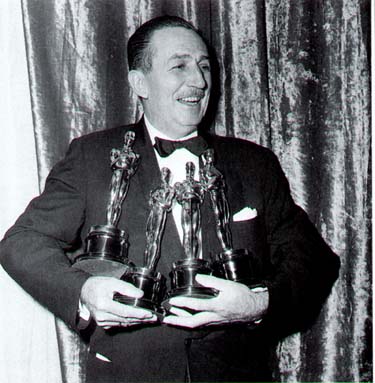
Walt Disney himself was probably not too concerned with this. The man won 22 Oscars, enough to make a football match out of little golden men if he so chose. The vast majority of these were for his short animations however and the fact remains that Beauty and the Beast remains the sole Disney animation, or any other animation for that matter to garner a best picture nomination in the award’s history. Think about that; one of the most difficult and painstaking forms of filmmaking, designed to cater for the most demanding of audiences has one best picture nomination in 81 years.
Walt Disney and his army of Oscars
The audience, however, is a problem. Traditionally they’re quite small, not particularly respected as critics and enjoy simple pleasures like mud and tantrums. But someone noticed that the big people they dragged along to see the animated films got rather annoyed if there was nothing in them that they could enjoy. Most animated movies are still aimed squarely at kids; talking animal goes on adventure, maybe makes soft allusions to intercourse/marriage to satisfy the adults who are trying to figure out if that’s Burt Reynolds they can hear. But Pixar has always challenged this formula by making films with broad and complex themes that can still appeal to kids. That’s why The Incredibles can be a children’s animation and one of the best action movies this century and why Ratatouille’s narrative and emotion overshadows the cute talking rat.
The Incredibles: family drama, comedy, action-adventure and superhero movie rolled into one
Best Animated Feature may have been created to recognise the technological advances and resurgence in popularity of animated films but when these films begin to transcend the confines of their genres the category can limit rather than celebrate their achievements. In much the same way that foreign language films are occasionally limited to their own specialist category when they deserve a higher accolade, Pixar has demonstrating that the animation bar can be pushed higher and higher and be so much more than a ‘kids’ film. Last year they made a film with barely any dialogue capture the attention and imaginations of its audience and this year, Up, a film with a grumpy septuagenarian as its hero, looks to be its most ambitious and riskiest project yet. But we say the same about every new Pixar project, and they never cease to amaze.
You can’t say the same thing about many of the finest of film producers and perhaps it’s time that the awards that define greatness recognise that on the rarest of occasions animation, gorgeous as it may be, is more than just animation.
Filmstubs is run by James Preston, a trainee journalist with a passion for film. My contributions are from a fan's perspective, rather than a critic's. Film is about opinions, and opinions are there to be shared.